San Antonio & the Hill Country
That is roughly how long it takes for mineral film to go from invisible to permanent. We work on the one part of a building everybody looks through and nobody looks at.
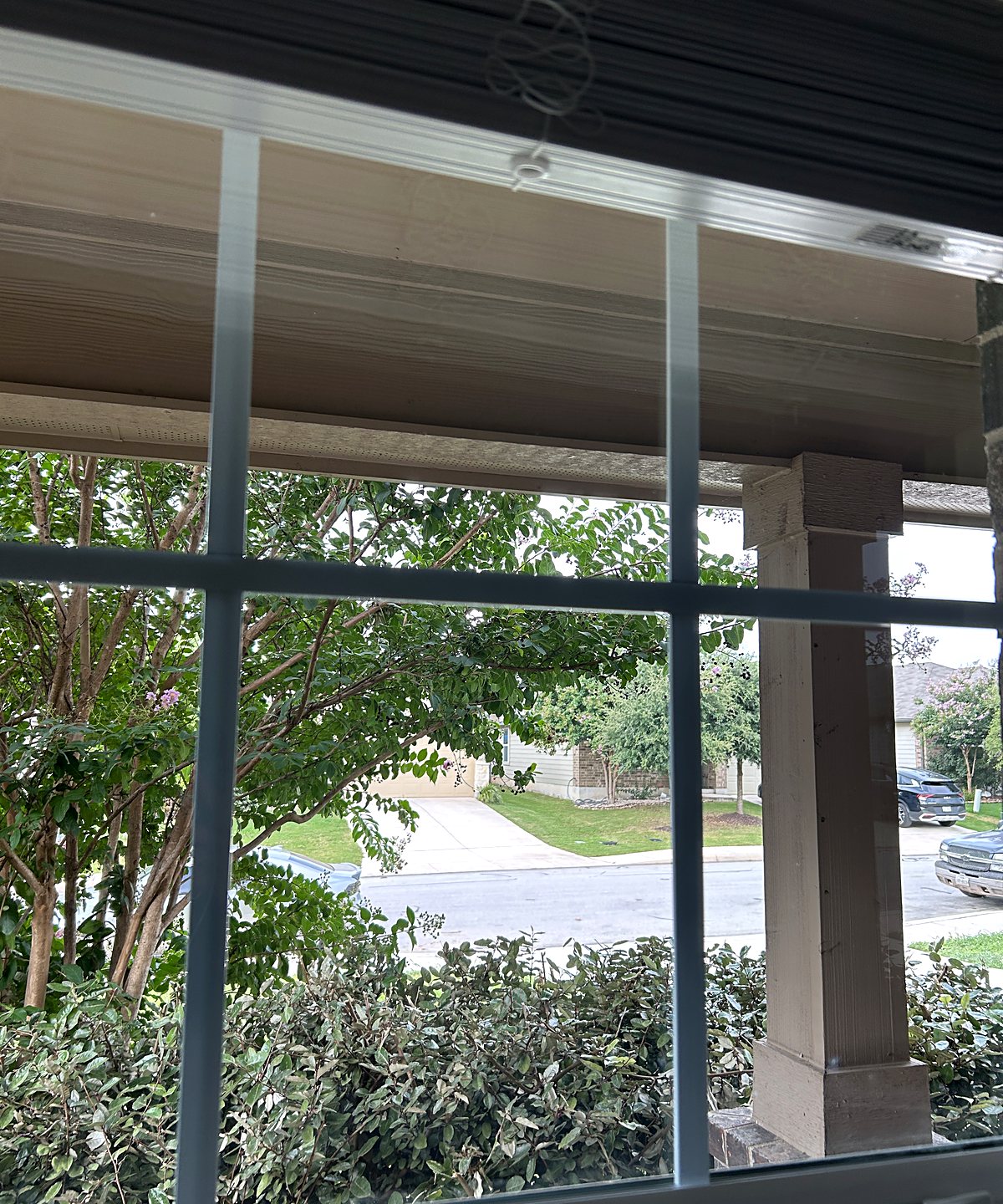
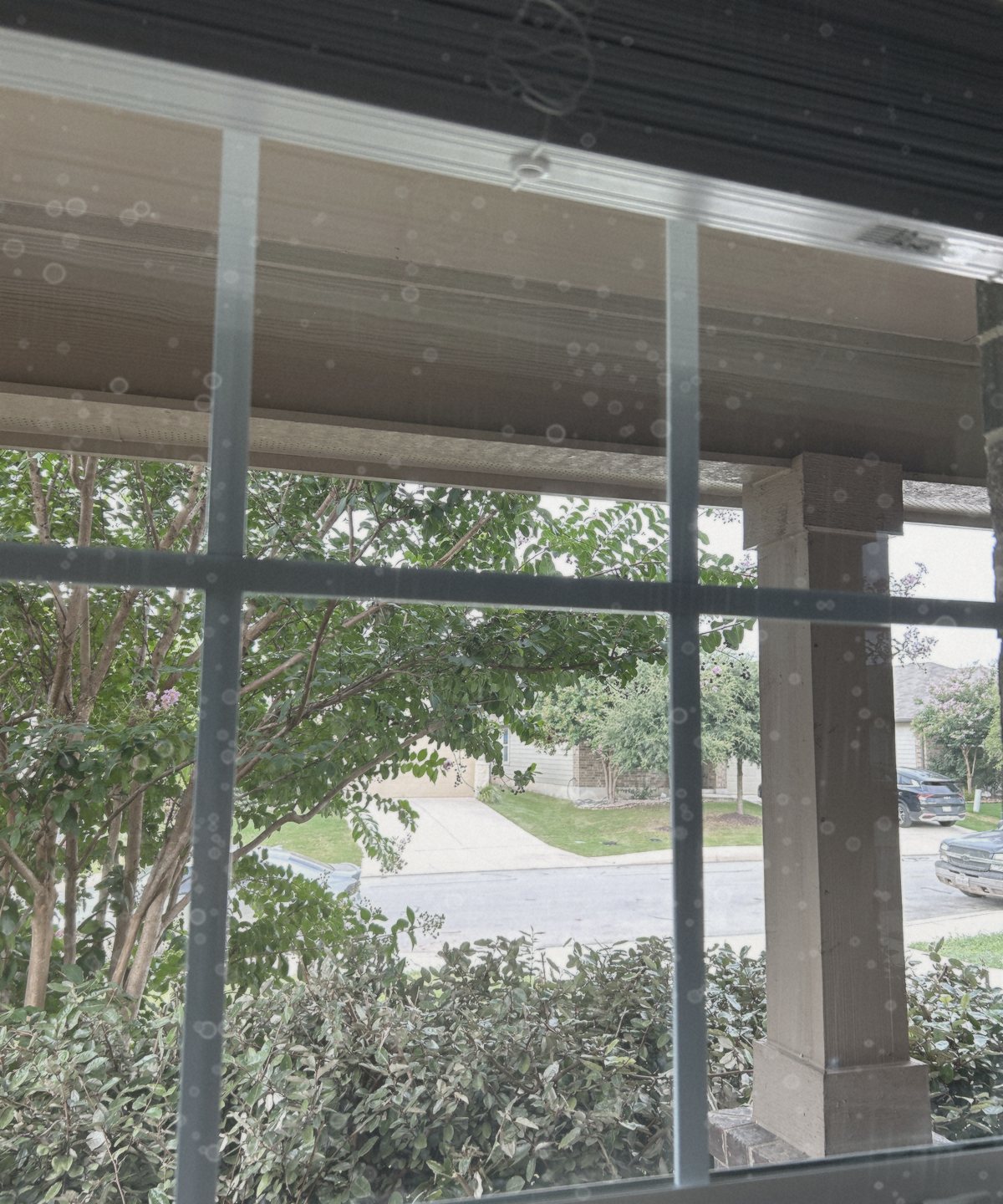
An illustration of hard-water film, applied to one of our own windows. Real before-and-afters from recent jobs are on our Google profile.
The thing nobody tells you
San Antonio sits on limestone. The water that comes out of your hose and your sprinkler heads carries dissolved calcium and magnesium out of the Edwards Aquifer, and when a droplet dries on a window at two in the afternoon, the water leaves and the mineral stays.
One season of that is a haze you stop noticing. Three seasons of that is etching — the mineral has bonded into the silica and no amount of soap will lift it. At that point the glass is not dirty. It is damaged, and the fix is restoration or replacement.
This is the part of the trade most people never hear, because most people were never told there was anything to know.
Field notes
A crew that treats every window the same way is guessing. What is sitting on your glass decides the water, the tool and the order of operations — and whether the job takes an hour or takes a restoration pass.
CaCO₃ · MgCO₃
From sprinkler overspray and hose rinse. Bonds to silica in sunlight. Soap will not touch it; it needs an acidic dwell or a cerium-oxide restoration pass.
Ashe juniper · Quercus
Lands dry, then bonds with morning dew into a yellow film that reads as a tint. Heaviest December through May. Lifts easily — if you get to it before summer bakes it on.
Abrasive · alkaline
Carried off caliche drives and construction. Abrasive enough that wiping a dry pane grinds it into the surface. Always flooded off first, never wiped dry.
Silicone · lime · paint
New builds and remodels. Needs a blade — but only on annealed glass. On tempered glass a blade will find fabricating debris and leave permanent scratches. We check first.
The lead service
Interior and exterior, screens, tracks and sills. Homes and storefronts. Priced by the pane so you know the number before we arrive.
Every job starts with a walk. We identify the deposit, check the corner etch for tempered panes, note any failed seals or cracked glazing, and tell you what we find — including the things we cannot fix. Nothing gets touched before that.
Water-fed pole with a resin-filtered feed at 0 TDS. Because there is nothing dissolved in the water, there is nothing left behind when it evaporates — the glass dries spotless with no contact and no ladder leaned against your siding. Second-storey panes get the same finish as the ones you can reach.
Drop cloths on the sills, a channel sized to each sash, a proper squeegee pass and a scrim finish on the edges. No spray bottle and paper towels. No streak line an inch in from the frame where a cloth ran out of water.
Screens are pulled, washed flat, rinsed and dried before they go back — never hosed down inside the frame, which just drives the grit into the glass you paid to have cleaned. They go back in the opening they came out of.
Vacuumed, then wiped. It is ten minutes of work and it is the difference between clean windows and a clean window. It is included; it is not an upsell.
If the mineral has already bonded, ordinary cleaning will not recover it. We test a corner pane, show you the result, and quote restoration separately — a cerium-oxide polish that takes the deposit out of the surface. We will tell you honestly when a pane is past saving.
We go around the property with you in the light. Anything you are not happy with gets done again on the spot. If it rains within 48 hours of an exterior clean, we come back — that is not a promotion, it is just the deal.
One thing we will not do: take a razor to tempered glass. Most tempered panes carry microscopic fabricating debris fused into the surface from the tempering oven, and a blade drags it across the glass and scratches it permanently. Plenty of crews scrape everything. We check the bug etch in the corner first, and if it is tempered, we solve it another way.
The rest of the envelope
Same crew, same standard, one point of contact. Most clients start with glass and end up handing us the whole exterior, because it is simpler and because the results stop fighting each other.
Low pressure, under 500 PSI, with a cleaning solution that kills the algae and mildew at the root instead of blasting the top layer off and leaving the spores. Pressure damages stucco and limestone. Chemistry does not.
Surface-cleaner passes on concrete and pavers so you get an even tone instead of wand stripes. Oil spots pre-treated. Pressure matched to the substrate, not to the machine's maximum.
Debris bagged off the roof, not blown into your beds. Downspouts flushed and confirmed flowing. We flag separated seams and loose fascia straps while we are up there.
Deionized water and a soft brush — the only safe method on an anti-reflective coating. A dusty array in South Texas gives up real output. This is the rare cleaning line item that pays itself back.
Routine maintenance, cleanups and bed edging — and, when the property calls for more than upkeep, full design and installation. Detailed below.
Design, install, maintain through the season, then take down and store. Custom-cut to your rooflines. Booked in autumn; the good dates go early.
Design & build
We take on full landscape projects — concept through installation — for homeowners reworking a yard end to end and for commercial sites where the grounds have to hold up under real use. One firm carries the design, the build and the maintenance afterward, so nobody is handing off drawings and hoping.
Cadence
The whole argument for a schedule is this: maintenance is a line item, restoration is a project, and replacement is a capital expense. Same glass, three prices.
A year. March, once cedar season is finished, and again in October before the holidays. Mineral never gets the two or three seasons it needs to bond.
Monthly to quarterly, depending on foot traffic and street exposure. Entry glass is the first thing a customer reads about a business and the last thing most owners look at.
Once, properly, before handover. Overspray and mortar left through a Texas summer stop being a cleaning problem and become a glazing invoice.
Reviews
Everything above is our account of the work. What follows is the customers' account of it, published on Google where we cannot edit a word of it. Read it there if you would rather not take ours.
Get a quote
Most estimates come back the same day. Nobody is going to call you six times — one honest number, and it is yours to think about.
Priced per pane at $8–$12, interior and exterior. Grouped small panes — a divided-light sash, a transom grid — count as one. Storey height, screen count and any hard-water restoration are confirmed on site. This slider is an estimate, not a bid.
Mon–Sat, 7am–7pm. Serving San Antonio, Alamo Heights, Stone Oak, Boerne, New Braunfels and the surrounding Hill Country.
Your request is in. If it is urgent, call (210) 748-9447 and you will reach someone directly.